In the Shadow of the Glen, by J. M. Synge
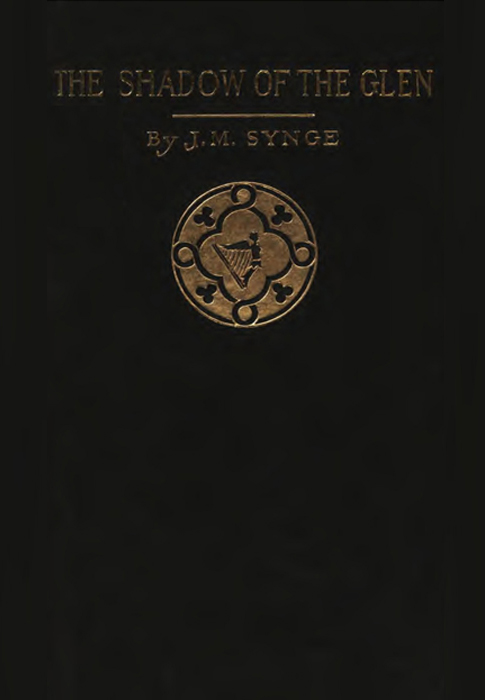
IN THE SHADOW OF THE GLEN
A PLAY IN ONE ACT
By J. M. Synge
First performed at the Molesworth Hall,best action figures for 14 year olds under 30 dollars Dublin, October 8th, 1903.
PERSONS
| DAN BURKE (farmer and herd) | George Roberts |
| NORA BURKE (his wife) | Maire Nic Shiubhlaigh |
| MICHEAL DARA (a young herd) | P. J. Kelly |
| A TRAMP | W. G. Fay |
SCENE.—The last cottage at the head of a long glen in County Wicklow.
(Cottage kitchen; turf fire on the right; a bed near it against the wall with abody lying on it covered with a sheet. A door is at the other end of the room,with a low table near it, and stools, or wooden chairs. There are a couple ofglasses on the table, and a bottle of whisky, as if for a wake, with two cups,a teapot, and a home-made cake. There is another small door near the bed. NoraBurke is moving about the room, settling a few things, and lighting candles onthe table, looking now and then at the bed with an uneasy look. Some one knockssoftly at the door. She takes up a stocking with money from the table and putsit in her pocket. Then she opens the door.)
TRAMP.
(Outside.) Good evening to you, lady of the house.
NORA.
Good evening, kindly stranger, it’s a wild night, God help you, to be outin the rain falling.
TRAMP.
It is, surely, and I walking to Brittas from the Aughrim fair.
NORA.
Is it walking on your feet, stranger?
TRAMP.
On my two feet, lady of the house, and when I saw the light below Ithought maybe if you’d a sup of new milk and a quiet decent corner wherea man could sleep (he looks in past her and sees the dead man.) The Lord havemercy on us all!
NORA.
It doesn’t matter anyway, stranger, come in out of the rain.
TRAMP.
(Coming in slowly and going towards the bed.) Is it departed he is?
NORA.
It is, stranger. He’s after dying on me, God forgive him, and thereI am now with a hundred sheep beyond on the hills, and no turf drawn for thewinter.
TRAMP.
(Looking closely at the dead man.) It’s a queer look is on him fora man that’s dead.
NORA.
(Half-humorously.) He was always queer, stranger, and I suppose themthat’s queer and they living men will be queer bodies after.
TRAMP.
Isn’t it a great wonder you’re letting him lie there, and heis not tidied, or laid out itself?
NORA.
(Coming to the bed.) I was afeard, stranger, for he put a black curse onme this morning if I’ld touch his body the time he’ld die sudden,or let any one touch it except his sister only, and it’s ten miles awayshe lives in the big glen over the hill.
TRAMP.
(Looking at her and nodding slowly.) It’s a queer story hewouldn’t let his own wife touch him, and he dying quiet in his bed.
NORA.
He was an old man, and an odd man, stranger, and it’s always up onthe hills he was thinking thoughts in the dark mist. (She pulls back a bit ofthe sheet.) Lay your hand on him now, and tell me if it’s cold he issurely.
TRAMP.
Is it getting the curse on me you’ld be, woman of the house? Iwouldn’t lay my hand on him for the Lough Nahanagan and it filled withgold.
NORA.
(Looking uneasily at the body.) Maybe cold would be no sign of death withthe like of him, for he was always cold, every day since I knew him,—andevery night, stranger,—(she covers up his face and comes away from thebed); but I’m thinking it’s dead he is surely, for he’scomplaining a while back of a pain in his heart, and this morning, the time hewas going off to Brittas for three days or four, he was taken with a sharpturn. Then he went into his bed and he was saying it was destroyed he was, thetime the shadow was going up through the glen, and when the sun set on the bogbeyond he made a great lep, and let a great cry out of him, and stiffenedhimself out the like of a dead sheep.
TRAMP.
(Crosses himself.) God rest his soul.
NORA.
(Pouring him out a glass of whisky.) Maybe that would do you better thanthe milk of the sweetest cow in County Wicklow.
TRAMP.
The Almighty God reward you, and may it be to your good health. (He drinks.)
NORA.
(Giving him a pipe and tobacco.) I’ve no pipes saving his own,stranger, but they’re sweet pipes to smoke.
TRAMP.
Thank you kindly, lady of the house.
NORA.
Sit down now, stranger, and be taking your rest.
TRAMP.
(Filling a pipe and looking about the room.) I’ve walked a greatway through the world, lady of the house, and seen great wonders, but I neverseen a wake till this day with fine spirits, and good tobacco, and the best ofpipes, and no one to taste them but a woman only.
NORA.
Didn’t you hear me say it was only after dying on me he was when thesun went down, and how would I go out into the glen and tell the neighbours,and I a lone woman with no house near me?
TRAMP.
(Drinking.) There’s no offence, lady of the house?
NORA.
No offence in life, stranger. How would the like of you, passing in thedark night, know the lonesome way I was with no house near me at all?
TRAMP.
(Sitting down.) I knew rightly. (He lights his pipe so that there is asharp light beneath his haggard face.) And I was thinking, and I coming inthrough the door, that it’s many a lone woman would be afeard of the likeof me in the dark night, in a place wouldn’t be so lonesome as thisplace, where there aren’t two living souls would see the little light youhave shining from the glass.
NORA.
(Slowly.) I’m thinking many would be afeard, but I never knew whatway I’d be afeard of beggar or bishop or any man of you at all. (Shelooks towards the window and lowers her voice.) It’s other things thanthe like of you, stranger, would make a person afeard.
TRAMP.
(Looking round with a half-shudder.) It is surely, God help us all!
NORA.
(Looking at him for a moment with curiosity.) You’re saying that,stranger, as if you were easy afeard.
TRAMP.
(Speaking mournfully.) Is it myself, lady of the house, that does bewalking round in the long nights, and crossing the hills when the fog is onthem, the time a little stick would seem as big as your arm, and a rabbit asbig as a bay horse, and a stack of turf as big as a towering church in the cityof Dublin? If myself was easily afeard, I’m telling you, it’s longago I’ld have been locked into the Richmond Asylum, or maybe have run upinto the back hills with nothing on me but an old shirt, and been eaten withcrows the like of Patch Darcy—the Lord have mercy on him—in theyear that’s gone.
NORA.
(With interest.) You knew Darcy?
TRAMP.
Wasn’t I the last one heard his living voice in the whole world?
NORA.
There were great stories of what was heard at that time, but would any onebelieve the things they do be saying in the glen?
TRAMP.
It was no lie, lady of the house.... I was passing below on a dark nightthe like of this night, and the sheep were lying under the ditch and every oneof them coughing, and choking, like an old man, with the great rain and thefog. Then I heard a thing talking—queer talk, you wouldn’t believeat all, and you out of your dreams,—and “Merciful God,” saysI, “if I begin hearing the like of that voice out of the thick mist,I’m destroyed surely.” Then I run, and I run, and I run, till I wasbelow in Rathvanna. I got drunk that night, I got drunk in the morning, anddrunk the day after,—I was coming from the races beyond—and thethird day they found Darcy.... Then I knew it was himself I was after hearing,and I wasn’t afeard any more.
NORA.
(Speaking sorrowfully and slowly.) God spare Darcy, he’ld alwayslook in here and he passing up or passing down, and it’s very lonesome Iwas after him a long while (she looks over at the bed and lowers her voice,speaking very clearly,) and then I got happy again—if it’s everhappy we are, stranger,—for I got used to being lonesome. (A short pause;then she stands up.)
NORA.
Was there any one on the last bit of the road, stranger, and you comingfrom Aughrim?
TRAMP.
There was a young man with a drift of mountain ewes, and he running afterthem this way and that.
NORA.
(With a half-smile.) Far down, stranger?
TRAMP.
A piece only.
(She fills the kettle and puts it on the fire.)
NORA.
Maybe, if you’re not easy afeard, you’ld stay here a shortwhile alone with himself.
TRAMP.
I would surely. A man that’s dead can do no hurt.
NORA.
(Speaking with a sort of constraint.) I’m going a little back to thewest, stranger, for himself would go there one night and another and whistle atthat place, and then the young man you’re after seeing—a kind of afarmer has come up from the sea to live in a cottage beyond—would walkround to see if there was a thing we’ld have to be done, and I’mwanting him this night, the way he can go down into the glen when the sun goesup and tell the people that himself is dead.
TRAMP.
(Looking at the body in the sheet.) It’s myself will go for him,lady of the house, and let you not be destroying yourself with the great rain.
NORA.
You wouldn’t find your way, stranger, for there’s a small pathonly, and it running up between two sluigs where an ass and cart would bedrowned. (She puts a shawl over her head.) Let you be making yourself easy, andsaying a prayer for his soul, and it’s not long I’ll be comingagain.
TRAMP.
(Moving uneasily.) Maybe if you’d a piece of a grey thread and asharp needle—there’s great safety in a needle, lady of thehouse—I’ld be putting a little stitch here and there in my oldcoat, the time I’ll be praying for his soul, and it going up naked to thesaints of God.
NORA.
(Takes a needle and thread from the front of her dress and gives it tohim.) There’s the needle, stranger, and I’m thinking youwon’t be lonesome, and you used to the back hills, for isn’t a deadman itself more company than to be sitting alone, and hearing the winds crying,and you not knowing on what thing your mind would stay?
TRAMP.
(Slowly.) It’s true, surely, and the Lord have mercy on us all!
(Nora goes out. The Tramp begins stitching one of the tags in his coat, sayingthe “De Profundis” under his breath. In an instant the sheet isdrawn slowly down, and Dan Burke looks out. The Tramp moves uneasily, thenlooks up, and springs to his feet with a movement of terror.)
DAN.
(With a hoarse voice.) Don’t be afeard, stranger; a man that’sdead can do no hurt.
TRAMP.
(Trembling.) I meant no harm, your honour; and won’t you leave meeasy to be saying a little prayer for your soul?
(A long whistle is heard outside.)
DAN.
(Sitting up in his bed and speaking fiercely.) Ah, the devil mend her....Do you hear that, stranger? Did ever you hear another woman could whistle thelike of that with two fingers in her mouth? (He looks at the table hurriedly.)I’m destroyed with the drouth, and let you bring me a drop quickly beforeherself will come back.
TRAMP.
(Doubtfully.) Is it not dead you are?
DAN.
How would I be dead, and I as dry as a baked bone, stranger?
TRAMP.
(Pouring out the whisky.) What will herself say if she smells the stuffon you, for I’m thinking it’s not for nothing you’re lettingon to be dead?
DAN.
It is not, stranger, but she won’t be coming near me at all, andit’s not long now I’ll be letting on, for I’ve a cramp in myback, and my hip’s asleep on me, and there’s been the devil’sown fly itching my nose. It’s near dead I was wanting to sneeze, and youblathering about the rain, and Darcy (bitterly)—the devil chokehim—and the towering church. (Crying out impatiently.) Give me thatwhisky. Would you have herself come back before I taste a drop at all?
(Tramp gives him the glass.)
DAN.
(After drinking.) Go over now to that cupboard, and bring me a black stickyou’ll see in the west corner by the wall.
TRAMP.
(Taking a stick from the cupboard) Is it that?
DAN.
It is, stranger; it’s a long time I’m keeping that stick forI’ve a bad wife in the house.
TRAMP.
(With a queer look.) Is it herself, master of the house, and she a grandwoman to talk?
DAN.
It’s herself, surely, it’s a bad wife she is—a bad wifefor an old man, and I’m getting old, God help me, though I’ve anarm to me still. (He takes the stick in his hand.) Let you wait now a shortwhile, and it’s a great sight you’ll see in this room in two hoursor three. (He stops to listen.) Is that somebody above?
TRAMP.
(Listening.) There’s a voice speaking on the path.
DAN.
Put that stick here in the bed and smooth the sheet the way it was lying.(He covers himself up hastily.) Be falling to sleep now and don’t let onyou know anything, or I’ll be having your life. I wouldn’t havetold you at all but it’s destroyed with the drouth I was.
TRAMP.
(Covering his head.) Have no fear, master of the house. What is it I knowof the like of you that I’ld be saying a word or putting out my hand tostay you at all?
(He goes back to the fire, sits down on a stool with his back to the bed andgoes on stitching his coat.)
DAN.
(Under the sheet, querulously.) Stranger.
TRAMP.
(Quickly.) Whisht, whisht. Be quiet I’m telling you, they’recoming now at the door.
(Nora comes in with Micheal Dara, a tall, innocent young man behind her.)
NORA.
I wasn’t long at all, stranger, for I met himself on the path.
TRAMP.
You were middling long, lady of the house.
NORA.
There was no sign from himself?
TRAMP.
No sign at all, lady of the house.
NORA.
(To Micheal.) Go over now and pull down the sheet, and look on himself,Micheal Dara, and you’ll see it’s the truth I’m telling you.
MICHEAL.
I will not, Nora, I do be afeard of the dead.
(He sits down on a stool next the table facing the tramp. Nora puts the kettleon a lower hook of the pot hooks, and piles turf under it.)
NORA.
(Turning to Tramp.) Will you drink a sup of tea with myself and the youngman, stranger, or (speaking more persuasively) will you go into the little roomand stretch yourself a short while on the bed, I’m thinking it’sdestroyed you are walking the length of that way in the great rain.
TRAMP.
Is it to go away and leave you, and you having a wake, lady of the house?I will not surely. (He takes a drink from his glass which he has beside him.)And it’s none of your tea I’m asking either.
(He goes on stitching. Nora makes the tea.)
MICHEAL.
(After looking at the tramp rather scornfully for a moment.)That’s a poor coat you have, God help you, and I’m thinkingit’s a poor tailor you are with it.
TRAMP.
If it’s a poor tailor I am, I’m thinking it’s a poorherd does be running back and forward after a little handful of ewes the way Iseen yourself running this day, young fellow, and you coming from the fair.
(Nora comes back to the table.)
NORA.
(To Micheal in a low voice.) Let you not mind him at all, Micheal Dara, hehas a drop taken and it’s soon he’ll be falling asleep.
MICHEAL.
It’s no lie he’s telling, I was destroyed surely. They werethat wilful they were running off into one man’s bit of oats, and anotherman’s bit of hay, and tumbling into the red bogs till it’s morelike a pack of old goats than sheep they were. Mountain ewes is a queer breed,Nora Burke, and I’m not used to them at all.
NORA.
(Settling the tea things.) There’s no one can drive a mountain ewebut the men do be reared in the Glen Malure, I’ve heard them say, andabove by Rathvanna, and the Glen Imaal, men the like of Patch Darcy, God sparehis soul, who would walk through five hundred sheep and miss one of them, andhe not reckoning them at all.
MICHEAL.
(Uneasily.) Is it the man went queer in his head the year that’sgone?
NORA.
It is surely.
TRAMP.
(Plaintively.) That was a great man, young fellow, a great man I’mtelling you. There was never a lamb from his own ewes he wouldn’t knowbefore it was marked, and he’ld run from this to the city of Dublin andnever catch for his breath.
NORA.
(Turning round quickly.) He was a great man surely, stranger, andisn’t it a grand thing when you hear a living man saying a good word of adead man, and he mad dying?
TRAMP.
It’s the truth I’m saying, God spare his soul.
(He puts the needle under the collar of his coat, and settles himself to sleepin the chimney-corner. Nora sits down at the table; their backs are turned tothe bed.)
MICHEAL.
(Looking at her with a queer look.) I heard tell this day, Nora Burke,that it was on the path below Patch Darcy would be passing up and passing down,and I heard them say he’ld never past it night or morning withoutspeaking with yourself.
NORA.
(In a low voice.) It was no lie you heard, Micheal Dara.
MICHEAL.
I’m thinking it’s a power of men you’re after knowingif it’s in a lonesome place you live itself.
NORA.
(Giving him his tea.) It’s in a lonesome place you do have to betalking with some one, and looking for some one, in the evening of the day, andif it’s a power of men I’m after knowing they were fine men, for Iwas a hard child to please, and a hard girl to please (she looks at him alittle sternly), and it’s a hard woman I am to please this day, MichealDara, and it’s no lie I’m telling you.
MICHEAL.
(Looking over to see that the tramp is asleep, and then pointing to thedead man.) Was it a hard woman to please you were when you took himself foryour man?
NORA.
What way would I live and I an old woman if I didn’t marry a manwith a bit of a farm, and cows on it, and sheep on the back hills?
MICHEAL.
(Considering.) That’s true, Nora, and maybe it’s no foolyou were, for there’s good grazing on it, if it is a lonesome place, andI’m thinking it’s a good sum he’s left behind.
NORA.
(Taking the stocking with money from her pocket, and putting it on thetable.) I do be thinking in the long nights it was a big fool I was that time,Micheal Dara, for what good is a bit of a farm with cows on it, and sheep onthe back hills, when you do be sitting looking out from a door the like of thatdoor, and seeing nothing but the mists rolling down the bog, and the mistsagain, and they rolling up the bog, and hearing nothing but the wind crying outin the bits of broken trees were left from the great storm, and the streamsroaring with the rain.
MICHEAL.
(Looking at her uneasily.) What is it ails you, this night, Nora Burke?I’ve heard tell it’s the like of that talk you do hear from men,and they after being a great while on the back hills.
NORA.
(Putting out the money on the table.) It’s a bad night, and a wildnight, Micheal Dara, and isn’t it a great while I am at the foot of theback hills, sitting up here boiling food for himself, and food for the broodsow, and baking a cake when the night falls? (She puts up the money,listlessly, in little piles on the table.) Isn’t it a long while I amsitting here in the winter and the summer, and the fine spring, with the younggrowing behind me and the old passing, saying to myself one time, to look onMary Brien who wasn’t that height (holding out her hand), and I a finegirl growing up, and there she is now with two children, and another coming onher in three months or four. (She pauses.)
MICHEAL.
(Moving over three of the piles.) That’s three pounds we havenow, Nora Burke.
NORA.
(Continuing in the same voice.) And saying to myself another time, to lookon Peggy Cavanagh, who had the lightest hand at milking a cow thatwouldn’t be easy, or turning a cake, and there she is now walking roundon the roads, or sitting in a dirty old house, with no teeth in her mouth, andno sense and no more hair than you’ld see on a bit of a hill and theyafter burning the furze from it.
MICHEAL.
That’s five pounds and ten notes, a good sum, surely!...It’s not that way you’ll be talking when you marry a young man,Nora Burke, and they were saying in the fair my lambs were the best lambs, andI got a grand price, for I’m no fool now at making a bargain when mylambs are good.
NORA.
What was it you got?
MICHEAL.
Twenty pound for the lot, Nora Burke.... We’ld do right to waitnow till himself will be quiet awhile in the Seven Churches, and thenyou’ll marry me in the chapel of Rathvanna, and I’ll bring thesheep up on the bit of a hill you have on the back mountain, and we won’thave anything we’ld be afeard to let our minds on when the mist is down.
NORA.
(Pouring him out some whisky.) Why would I marry you, Mike Dara?You’ll be getting old and I’ll be getting old, and in a littlewhile I’m telling you, you’ll be sitting up in your bed—theway himself was sitting—with a shake in your face, and your teethfalling, and the white hair sticking out round you like an old bush where sheepdo be leaping a gap.
(Dan Burke sits up noiselessly from under the sheet, with his hand to his face.His white hair is sticking out round his head.)
NORA.
(Goes on slowly without hearing him.) It’s a pitiful thing to begetting old, but it’s a queer thing surely. It’s a queer thing tosee an old man sitting up there in his bed with no teeth in him, and a roughword in his mouth, and his chin the way it would take the bark from the edge ofan oak board you’ld have building a door.... God forgive me, MichealDara, we’ll all be getting old, but it’s a queer thing surely.
MICHEAL.
It’s too lonesome you are from living a long time with an oldman, Nora, and you’re talking again like a herd that would be coming downfrom the thick mist (he puts his arm round her), but it’s a fine lifeyou’ll have now with a young man, a fine life surely....
(Dan sneezes violently. Micheal tries to get to the door, but before he can doso, Dan jumps out of the bed in queer white clothes, with his stick in hishand, and goes over and puts his back against it.)
MICHEAL.
Son of God deliver us.
(Crosses himself, and goes backward across the room.)
DAN.
(Holding up his hand at him.) Now you’ll not marry her the timeI’m rotting below in the Seven Churches, and you’ll see the thingI’ll give you will follow you on the back mountains when the wind ishigh.
MICHEAL.
(To Nora.) Get me out of it, Nora, for the love of God. He always didwhat you bid him, and I’m thinking he would do it now.
NORA.
(Looking at the Tramp.) Is it dead he is or living?
DAN.
(Turning towards her.) It’s little you care if it’s dead orliving I am, but there’ll be an end now of your fine times, and all thetalk you have of young men and old men, and of the mist coming up or goingdown. (He opens the door.) You’ll walk out now from that door, NoraBurke, and it’s not to-morrow, or the next day, or any day of your life,that you’ll put in your foot through it again.
TRAMP.
(Standing up.) It’s a hard thing you’re saying for an oldman, master of the house, and what would the like of her do if you put her outon the roads?
DAN.
Let her walk round the like of Peggy Cavanagh below, and be begging moneyat the cross-road, or selling songs to the men. (To Nora.) Walk out now, NoraBurke, and it’s soon you’ll be getting old with that life,I’m telling you; it’s soon your teeth’ll be falling and yourhead’ll be the like of a bush where sheep do be leaping a gap.
(He pauses: she looks round at Micheal.)
MICHEAL.
(Timidly.) There’s a fine Union below in Rathdrum.
DAN.
The like of her would never go there.... It’s lonesome roadsshe’ll be going and hiding herself away till the end will come, and theyfind her stretched like a dead sheep with the frost on her, or the big spiders,maybe, and they putting their webs on her, in the butt of a ditch.
NORA.
(Angrily.) What way will yourself be that day, Daniel Burke? What way willyou be that day and you lying down a long while in your grave? For it’sbad you are living, and it’s bad you’ll be when you’re dead.(She looks at him a moment fiercely, then half turns away and speaksplaintively again.) Yet, if it is itself, Daniel Burke, who can help it at all,and let you be getting up into your bed, and not be taking your death with thewind blowing on you, and the rain with it, and you half in your skin.
DAN.
It’s proud and happy you’ld be if I was getting my death theday I was shut of yourself. (Pointing to the door.) Let you walk out throughthat door, I’m telling you, and let you not be passing this way ifit’s hungry you are, or wanting a bed.
TRAMP.
(Pointing to Micheal.) Maybe himself would take her.
NORA.
What would he do with me now?
TRAMP.
Give you the half of a dry bed, and good food in your mouth.
DAN.
Is it a fool you think him, stranger, or is it a fool you were bornyourself? Let her walk out of that door, and let you go along with her,stranger—if it’s raining itself—for it’s too much talkyou have surely.
TRAMP.
(Going over to Nora.) We’ll be going now, lady of thehouse—the rain is falling, but the air is kind and maybe it’ll be agrand morning by the grace of God.
NORA.
What good is a grand morning when I’m destroyed surely, and I goingout to get my death walking the roads?
TRAMP.
You’ll not be getting your death with myself, lady of the house,and I knowing all the ways a man can put food in his mouth.... We’ll begoing now, I’m telling you, and the time you’ll be feeling thecold, and the frost, and the great rain, and the sun again, and the south windblowing in the glens, you’ll not be sitting up on a wet ditch, the wayyou’re after sitting in the place, making yourself old with looking oneach day, and it passing you by. You’ll be saying one time,“It’s a grand evening, by the grace of God,” and anothertime, “It’s a wild night, God help us, but it’ll passsurely.” You’ll be saying—
DAN.
(Goes over to them crying out impatiently.) Go out of that door, I’mtelling you, and do your blathering below in the glen.
(Nora gathers a few things into her shawl.)
TRAMP.
(At the door.) Come along with me now, lady of the house, and it’snot my blather you’ll be hearing only, but you’ll be hearing theherons crying out over the black lakes, and you’ll be hearing the grouseand the owls with them, and the larks and the big thrushes when the days arewarm, and it’s not from the like of them you’ll be hearing a talkof getting old like Peggy Cavanagh, and losing the hair off you, and the lightof your eyes, but it’s fine songs you’ll be hearing when the sungoes up, and there’ll be no old fellow wheezing, the like of a sicksheep, close to your ear.
NORA.
I’m thinking it’s myself will be wheezing that time with lyingdown under the Heavens when the night is cold; but you’ve a fine bit oftalk, stranger, and it’s with yourself I’ll go.(She goes towards the door, then turns to Dan.) You think it’s a grandthing you’re after doing with your letting on to be dead, but what is itat all? What way would a woman live in a lonesome place the like of this place,and she not making a talk with the men passing? And what way will yourself livefrom this day, with none to care for you? What is it you’ll have now buta black life, Daniel Burke, and it’s not long I’m telling you, tillyou’ll be lying again under that sheet, and you dead surely.
(She goes out with the Tramp. Micheal is slinking after them, but Dan stopshim.)
DAN.
Sit down now and take a little taste of the stuff, Micheal Dara.There’s a great drouth on me, and the night is young.
MICHEAL.
(Coming back to the table.) And it’s very dry I am, surely, withthe fear of death you put on me, and I after driving mountain ewes since theturn of the day.
DAN.
(Throwing away his stick.) I was thinking to strike you, Micheal Dara, butyou’re a quiet man, God help you, and I don’t mind you at all.
(He pours out two glasses of whisky, and gives one to Micheal.)
DAN.
Your good health, Micheal Dara.
MICHEAL.
God reward you, Daniel Burke, and may you have a long life, and a quietlife, and good health with it. (They drink.)
CURTAIN.
Article URL: http://94591.stemtoysfor10yearolds.xyz/html/08b999982.html
Copyright notice
This article reflects the author's views only and does not represent this site.
Published with the author's permission. Do not reprint without approval.